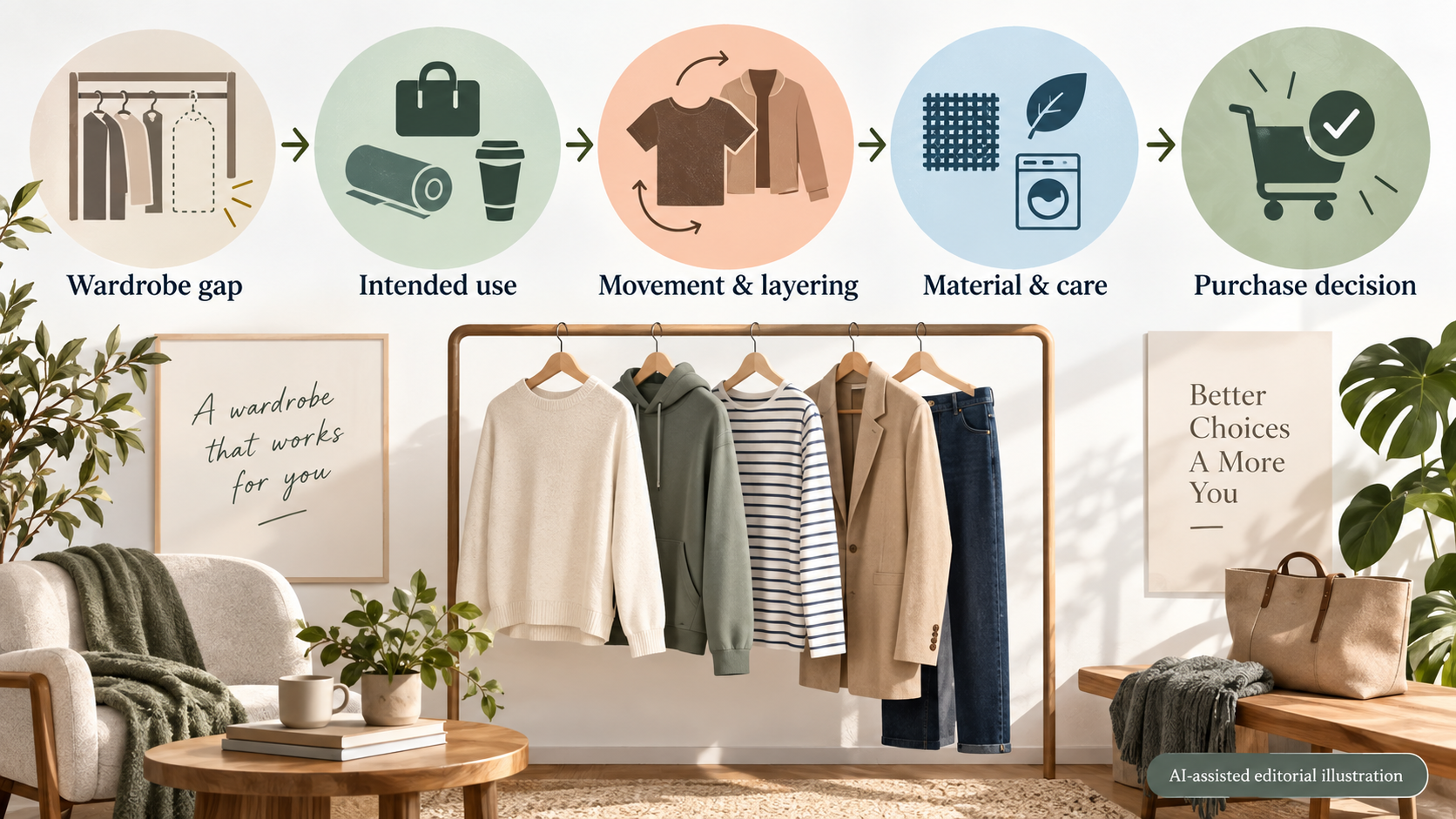
Start with your everyday wardrobe needs
AI-generated illustration — not a retailer product photo.
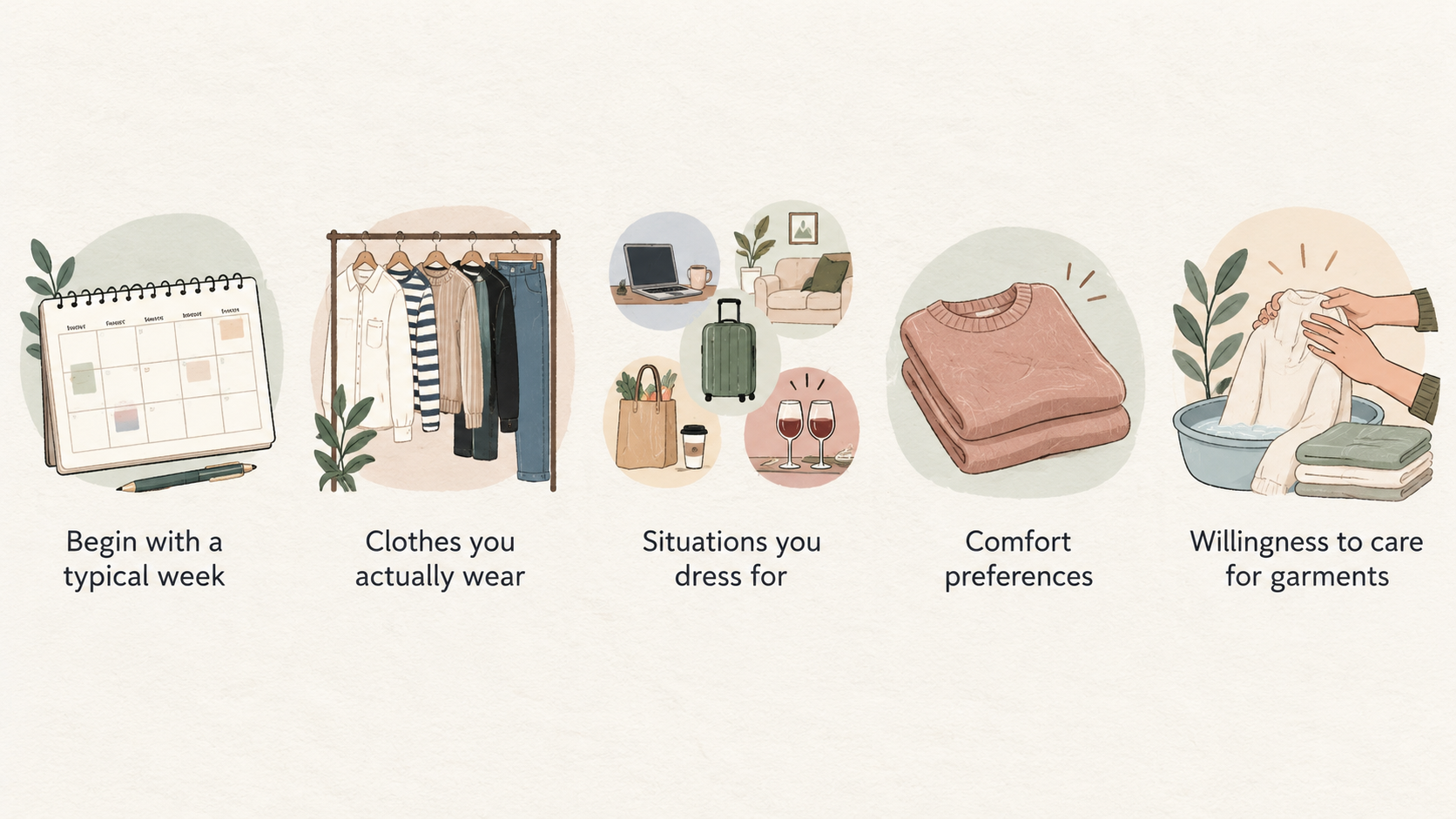
Choose everyday basics by starting with the clothes you actually wear and the situations you dress for. Your shortlist should reflect your routine, comfort preferences and willingness to care for garments. Treat it as a response to specific wardrobe gaps rather than a standard shopping list.
Begin with a typical week. Consider working days, time at home, travel, errands and social plans. Note any dress expectations, the weather you need to accommodate and whether you regularly move between warm interiors and cooler outdoor spaces. Include your own preferences: a neckline you enjoy wearing matters more to this exercise than one you feel obliged to own.
Next, pull together several outfits from your existing clothes. Ask:
- Which combinations would I happily wear again tomorrow?
- Where am I missing a suitable top, bottom or layer?
- Which items stay unworn, and what stops me choosing them?
- Does my laundry schedule leave a recurring gap?
Describe each gap in practical terms. “A top to wear under my work cardigan” gives you a clearer selection brief than “more tops”. Check whether an existing item could already fill that role before adding anything to your list.
For category inspiration, the supplied UNIQLO UK women's page lists options including T-shirts, shirts, knitwear and jeans. Those categories provide starting points for browsing; their presence does not establish that a particular garment will suit you. Use your wardrobe audit to decide which, if any, deserve attention.
Identify the strengths of different everyday basics
AI-generated illustration — not a retailer product photo.
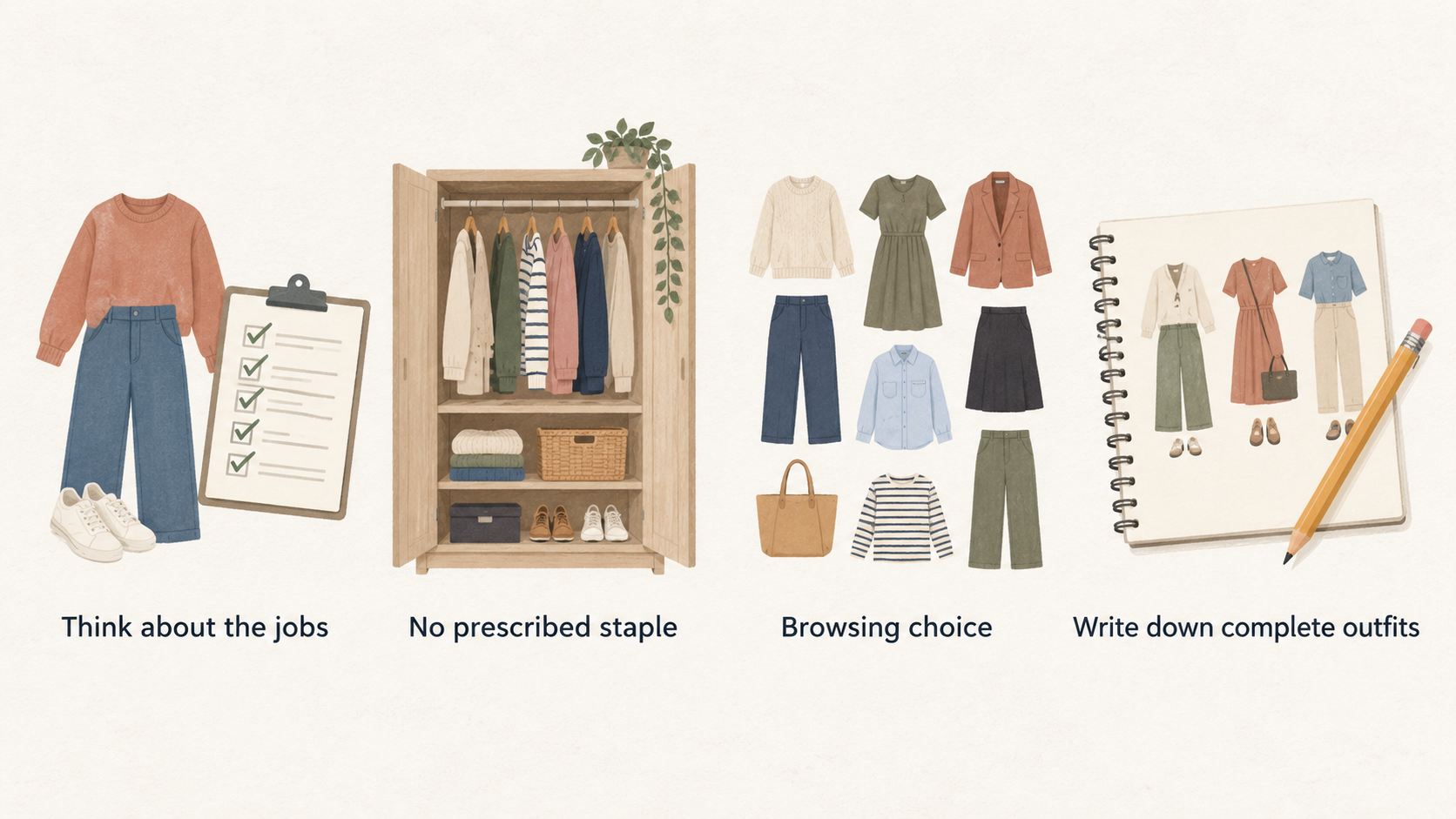
Think about categories in terms of the jobs you want clothes to do. You need not buy from every category, and there is no requirement to build your wardrobe around jeans, a white shirt or any other prescribed staple.
| Category | Possible role to consider | Question before shortlisting |
|---|---|---|
| T-shirts and other simple tops | A main top or part of a layered outfit | Does the neckline, sleeve shape and length work with my planned outfit? |
| Shirts and blouses | A top for the dress expectations I encounter | Would I wear this tucked, untucked or beneath another layer? |
| Trousers and jeans | A bottom around which to build repeat outfits | Can I sit and move comfortably in the intended cut? |
| Knitwear and other layers | An additional layer for the conditions I dress for | Does it fit over my usual top and beneath any outerwear? |
| Optional dresses | An alternative outfit starting point | Does it work with the footwear and layers I already own? |
The supplied UNIQLO UK page includes these broad clothing categories. This illustrates browsing choice, rather than evidence of their quality or suitability.
To set priorities, write down complete outfits for each potential purchase. Include footwear and any necessary outer layer. A hypothetical shirt that works with your existing work trousers and weekend skirt may deserve investigation before one that requires several additional purchases. That is a planning judgement, not a promise of financial savings.
Give the highest priority to gaps you encounter repeatedly. If your current bottoms already work well but you struggle to find a comfortable top for them, start there. Leave categories that already serve your routine off the shopping list unless you can name a specific unmet need.
Check fit through movement and layering
AI-generated illustration — not a retailer product photo.
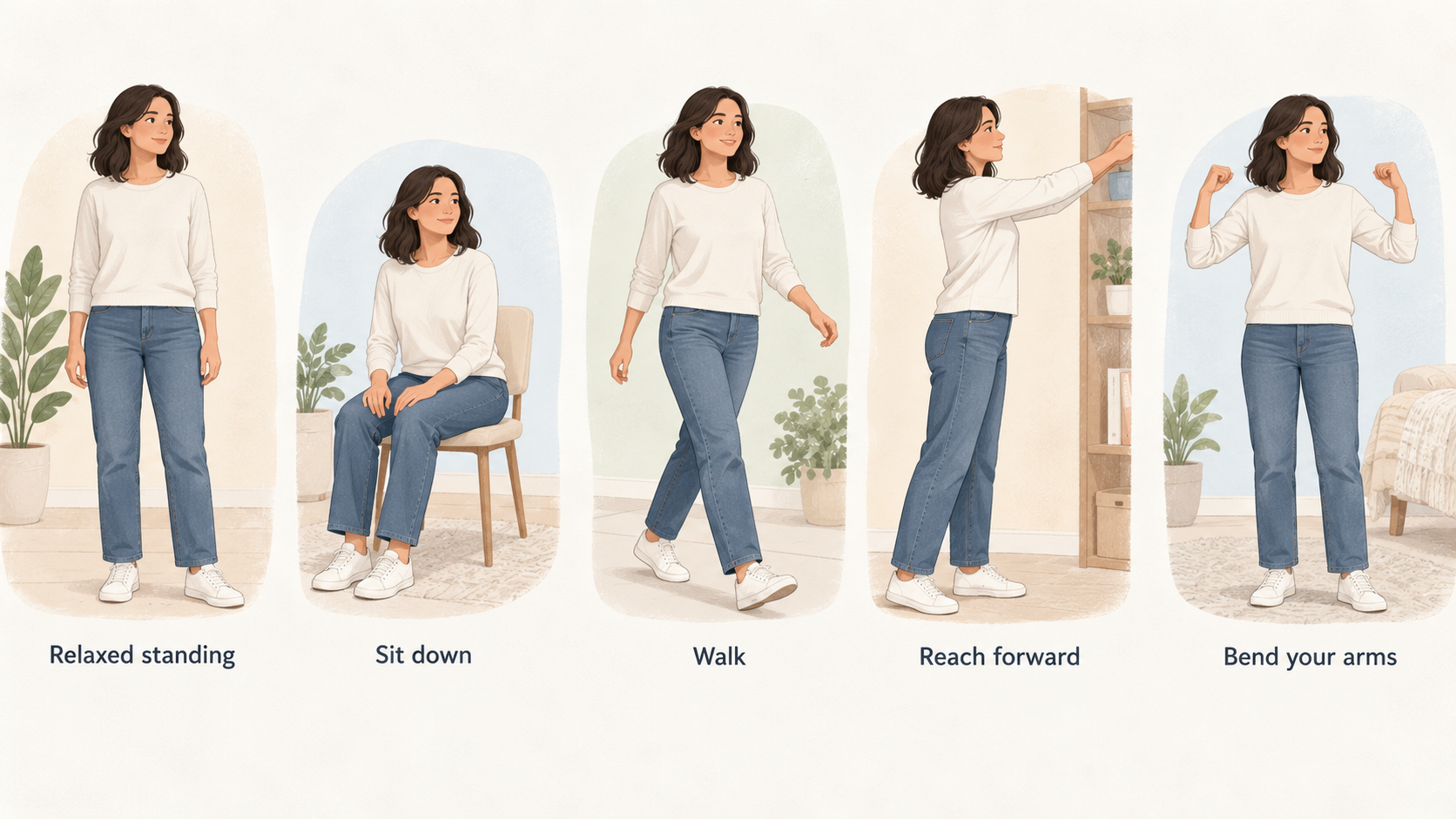
Assess fit against what you intend to do in the garment. Decide what comfortable means for you: a close fit, room through the waist, freedom at the shoulders or space for another layer. Use those preferences as your criteria throughout the try-on.
Start in a relaxed standing position, then move as you normally would. Sit down, walk, reach forward and bend your arms. For a work outfit, try sitting as you would at a desk. For a shirt, check whether the fastening and neckline remain as you want them when seated. For trousers, assess the waistband in both standing and sitting positions.
Use these prompts to record your observations:
- Do I feel restriction, pressure or unwanted movement anywhere?
- Am I repeatedly pulling down the hem or adjusting the waistband?
- Does the garment provide the coverage I want when I move?
- Are the sleeves and hems practical with my usual shoes and activities?
- Does the fit still feel right in my intended layered outfit?
Try layers together wherever possible. Wear the kind of top you plan to use beneath knitwear, and check the combination with your coat if relevant. Judge the complete outfit rather than relying only on how each piece looks separately.
When shopping online, consult the chosen item's size information and measurement instructions. Check whether measurements describe the body or the finished garment before comparing them with your own notes. Look for any item-specific fit description, and identify what remains unclear.
If two sizes seem plausible, decide which measurements and comfort needs matter most for that garment. Avoid assuming that a familiar size label guarantees your preferred fit. Keep your decision provisional until you can assess the item under the retailer's applicable return conditions.
Match materials and care to your habits
Read material descriptions as a starting point for questions. Before buying, inspect the exact composition and available care instructions for the garment you have selected. Keep your preferred feel, coverage and laundry routine in view throughout that check.
The supplied UNIQLO UK page mentions pure cashmere, Merino and lambswool within its knitwear collection description. It also includes a HEATTECH Cashmere Blend reference with a footnote stating 9% cashmere. These are examples of why the collection name alone should not replace a check of the chosen item's composition. They do not establish the composition of every garment in a collection.
Separate three questions:
- What is it made from? Read the listed fibres and percentages, including separate information for linings or other components where provided.
- Do I like wearing it? If you can inspect the item, assess its feel against your skin and whether its appearance and coverage meet your preferences.
- Am I willing to follow its care instructions? Review washing, drying and any other specified care before committing.
For a simple laundry routine, define what you are prepared to do. You might prefer purchases whose stated instructions fit your existing washing and drying arrangements. If a garment calls for a process you are unlikely to follow, treat that as a reason to reconsider.
Check opacity with the underlayers you intend to wear and under suitable lighting when possible. Online, record missing composition or care information as a question to resolve. Avoid filling those gaps with assumptions about softness, warmth, shrinkage or longevity based only on a fibre name or collection description.
Recognise evidence gaps and UK shopping limitations
Use retailer pages for the information they actually provide. The supplied UNIQLO UK page offers category navigation and collection descriptions. It does not establish how an individual garment will fit you, how long it will last or whether its price represents good value for your circumstances. Seasonal presentation and promotional language do not resolve those questions. Source: UNIQLO UK.
The other supplied source is an ARKET EU towels page. Although its excerpt includes clothing navigation, it is a homeware source. It is insufficient evidence for women's clothing recommendations, a comparison with UNIQLO or UK purchase conditions.
For a UK order, verify the following on the relevant item and market pages before paying:
- Whether the selected item and size are available for delivery to your address.
- Which sizing system and measurement guidance apply.
- The checkout currency and total payable amount, including any stated delivery charges or additional fees.
- The delivery estimate for your destination.
- Return eligibility, deadlines, costs and the required return process.
Do not carry conditions from an EU listing over to a UK purchase without checking them. If an important answer is missing, investigate further or leave the item off your immediate shortlist.
This guide provides a selection process. Its supplied sources do not support a tested product ranking or an assessment of long-term garment performance.
Build your shortlist and decide what to buy
Turn each wardrobe gap into a short purchase brief. Write down the intended use, the existing clothes it needs to accompany, your fit preferences and your care limits. Add a spending limit that you are comfortable with before browsing individual items.
Use the following decision table as a reusable checkpoint:
| Check | Shortlist when… | Investigate further or skip when… |
|---|---|---|
| Genuine gap | You can name an unmet clothing need | You cannot identify a role beyond something you already own |
| Intended use | You can describe an outfit and occasion | The outfit depends on additional purchases you have not planned |
| Movement and layering | Available checks support your preferred fit | Restriction, coverage or layering questions remain unresolved |
| Materials and care | You have checked the details and accept the requirements | Important information is missing or the care does not suit you |
| Purchase conditions | The total cost and applicable conditions are acceptable | Delivery, sizing or returns remain unclear |
For a hypothetical example, suppose you need a top beneath an existing cardigan. Your brief might specify a preferred neckline, sleeves that sit comfortably under the cardigan and care instructions compatible with your routine. A candidate belongs on the shortlist only after you have checked those points; its category or colour alone does not settle the decision.
Before paying, reread your original gap statement. Confirm the selected size, colour, composition, care information, total cost and return conditions. Save useful item details for reference.
Make your wardrobe shortlist: record one genuine gap, one planned outfit and any unanswered questions before choosing your next basic.
Frequently Asked Questions
How many everyday wardrobe basics do I need?
Use your routine and laundry schedule to set a starting point rather than adopting a fixed number. Map the outfits you need between washes, then check which existing clothes can serve those occasions. Consider whether you want different items for work, home or other activities. Add to your shortlist only where that exercise reveals a gap. If you are uncertain, start with the most frequently encountered need and reassess after you have used the resulting outfit in your routine.
What should I check if I am between clothing sizes?
Read the chosen item's size guide and establish whether its figures are body or garment measurements. Follow the measurement method provided, then consider where you want ease and where you prefer a closer fit. During a try-on, compare sitting, reaching and layering comfort as well as appearance. Do not automatically choose the smaller or larger label. If ordering online, check the applicable return conditions before deciding how to assess an uncertain size.
How do I choose basics when I want a simple laundry routine?
Write down which washing and drying processes you are willing and able to use, then check each candidate's stated care instructions against that list. Inspect the exact composition rather than relying on a collection name. If care information is absent, seek clarification before buying. Leave out items whose requirements you are unlikely to follow, even if their style otherwise suits your wardrobe. Base the decision on the chosen garment's instructions.
What should UK shoppers check before ordering from an overseas clothing site?
Confirm delivery to your UK address, the applicable size guidance, checkout currency and total payable cost. Review any stated additional charges, delivery estimates and return conditions, including costs and where a return must be sent. Use the pages and terms that apply to your destination. An EU category page does not establish UK shopping conditions, so resolve any market-specific uncertainty before completing the order.
Sources
Related reading
- How women's everyday wardrobe basics should fit, feel, and perform
- When to buy women's everyday wardrobe basics for better value
- How to identify genuine women's everyday wardrobe basics deals
- Best women's everyday wardrobe basics: evidence-led top choices
Editorial information: About our editorial team · Read our editorial policy · Read our affiliate disclosure.