UNIQLO vs COS: The Verdict
AI-generated illustration — not a retailer product photo.
Explore UNIQLO first if your priority is building repeatable everyday outfits; explore COS first if you want ideas for refreshing your office wardrobe. That is a provisional recommendation about styling priorities. The available evidence cannot establish which brand will fit your body better, last longer or offer better value on comparable garments.
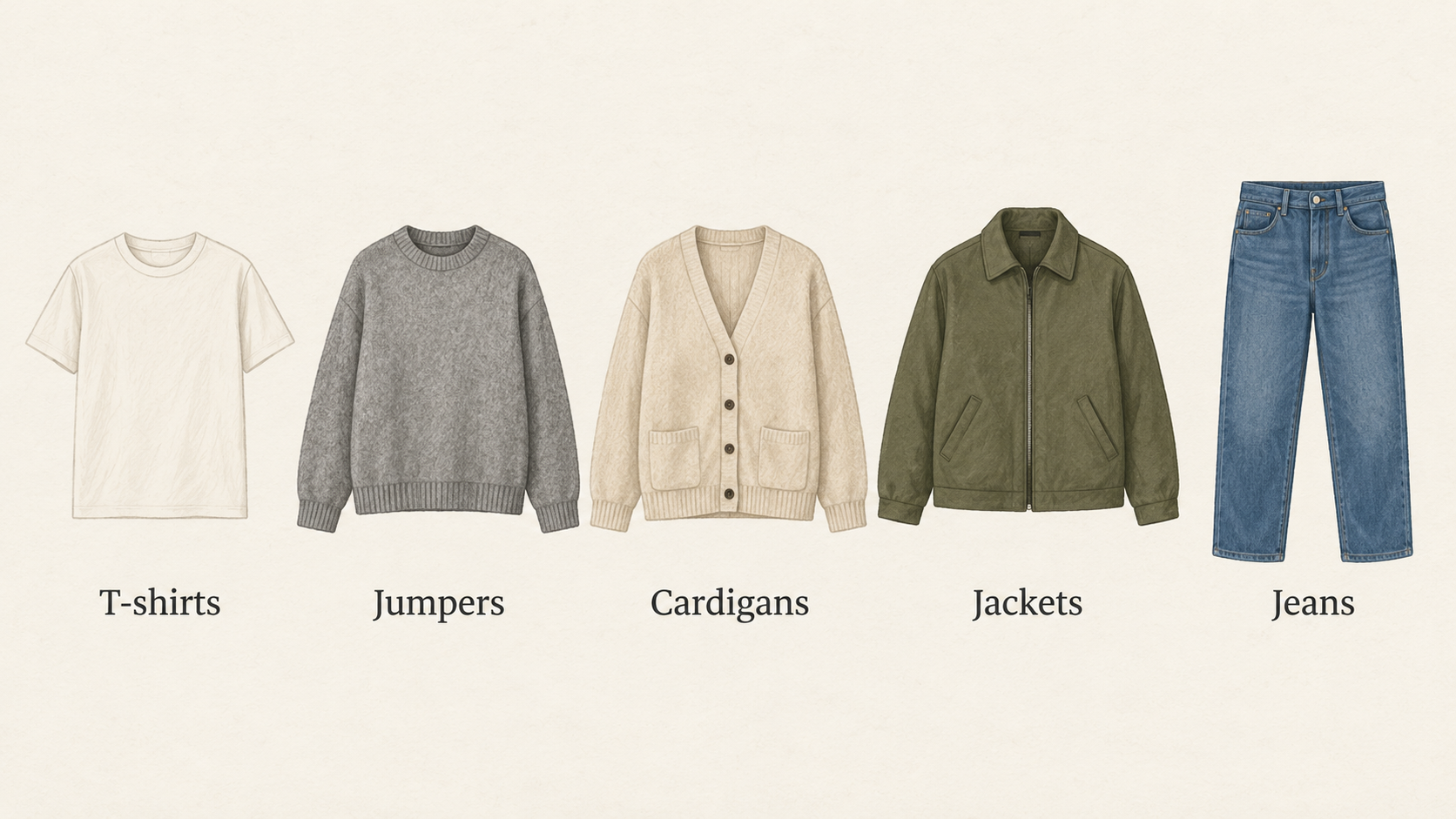
The UNIQLO starting point comes from Chinazor “Chichi” Offor’s December 2025 selection for Who What Wear. It highlights T-shirts, jumpers, cardigans, jackets and jeans as wardrobe foundations. Her examples offer a useful browsing direction if you want pieces to combine with clothes you already own. Read Offor’s UNIQLO selection.
For COS, Remy Farrell’s April 2023 feature describes choosing outfits to refresh her working week while retaining weekend usefulness. It supports considering COS for that styling brief, although those selections should be treated as historical inspiration. Read Farrell’s COS feature.
The evidence is uneven: UNIQLO also has a supplied official UK catalogue snapshot, while COS has no equivalent current primary source here. Neither brand has matched garment measurements or comparative wash testing in the supplied material.
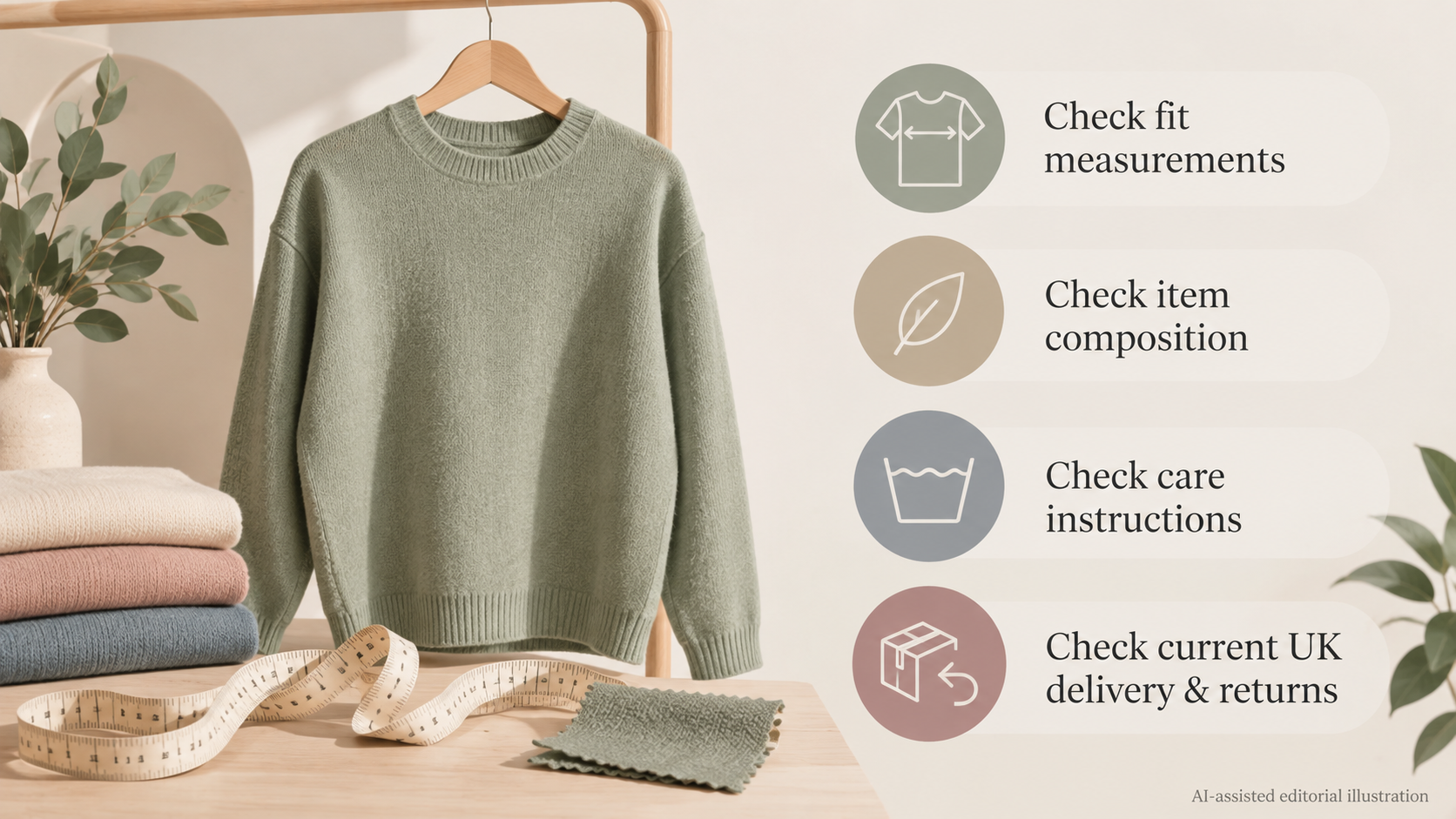
Your most useful next step is to identify the wardrobe gap first, then compare specific garments. A promising outfit idea is a reason to investigate an item; physical fit, composition and purchase terms still need checking.
Brand Overview and Evidence Scope
AI-generated illustration — not a retailer product photo.
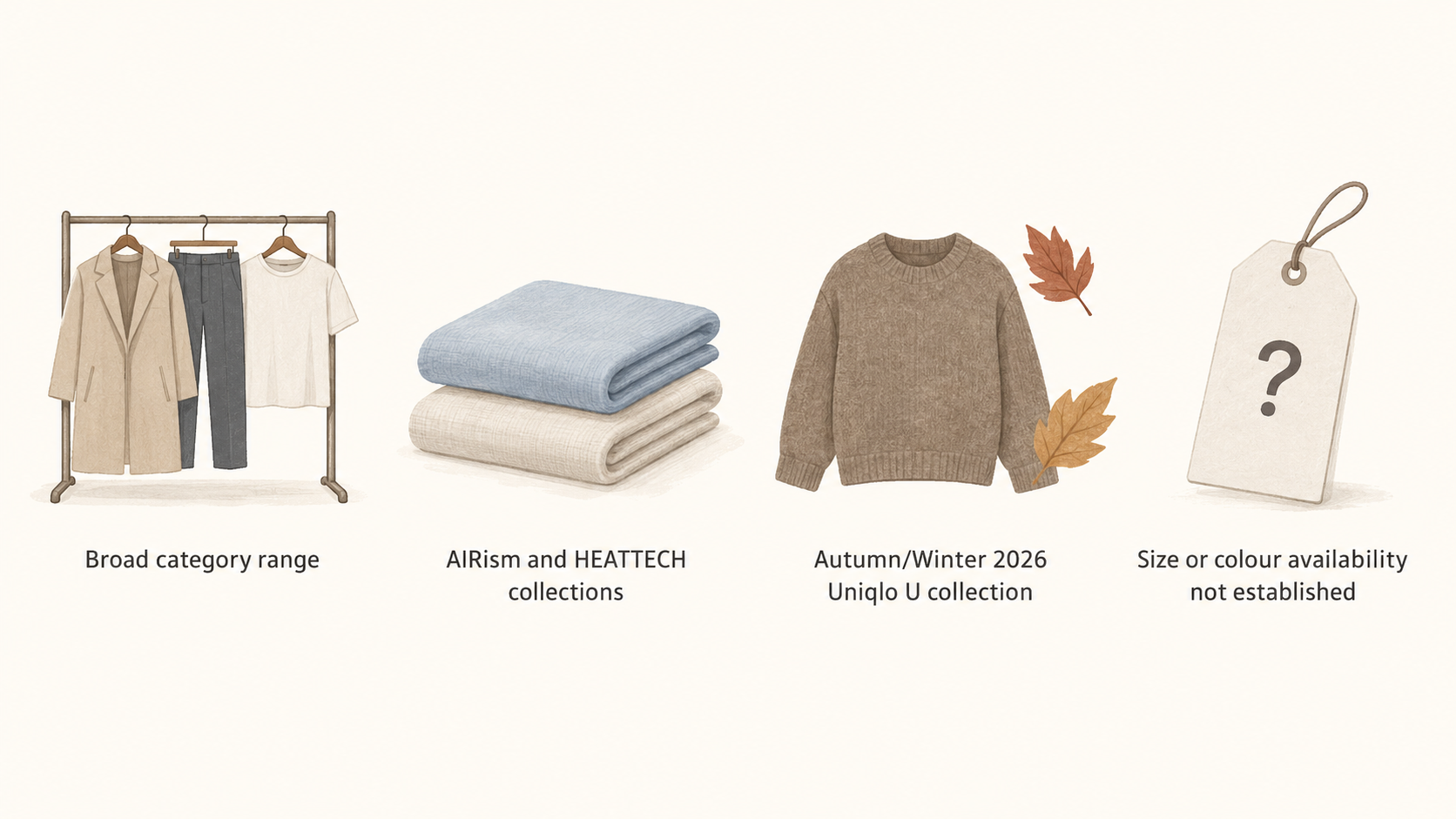
The supplied UNIQLO UK page establishes a broad category range: outerwear, jeans and other trousers, T-shirts, shirts, knitwear, dresses, accessories and more. It also presents AIRism and HEATTECH collections, alongside an Autumn/Winter 2026 Uniqlo U collection. This supports using UNIQLO as a starting point for browsing several everyday wardrobe categories in a UK context. It does not establish that any particular size or colour remains available. See the UNIQLO UK women’s catalogue.
Offor’s independent editorial selection, published on 9 December 2025, adds examples of how basics might function within a wardrobe. She identifies herself as a Los Angeles resident and explicitly says she owns one featured jumper. That is a specific personal observation, not evidence that she tested every item or evaluated UK purchasing conditions. Read the UNIQLO buying guide.
Farrell’s COS feature, last updated on 6 April 2023, provides a different kind of evidence: an attributed account of selecting clothing for office and weekend outfits. Its age makes it useful for understanding the styling approach illustrated at that time, rather than establishing today’s range. Read the COS outfit feature.
Both editorial articles disclose affiliate commissions. Their observations can inform a shortlist, but they are not controlled comparisons. There is no current COS primary evidence, equivalent-item price comparison or matched testing here. Consequently, this guide offers shopping directions and item-level checks rather than a definitive brand ranking.
Everyday Clothing Compared
AI-generated illustration — not a retailer product photo.
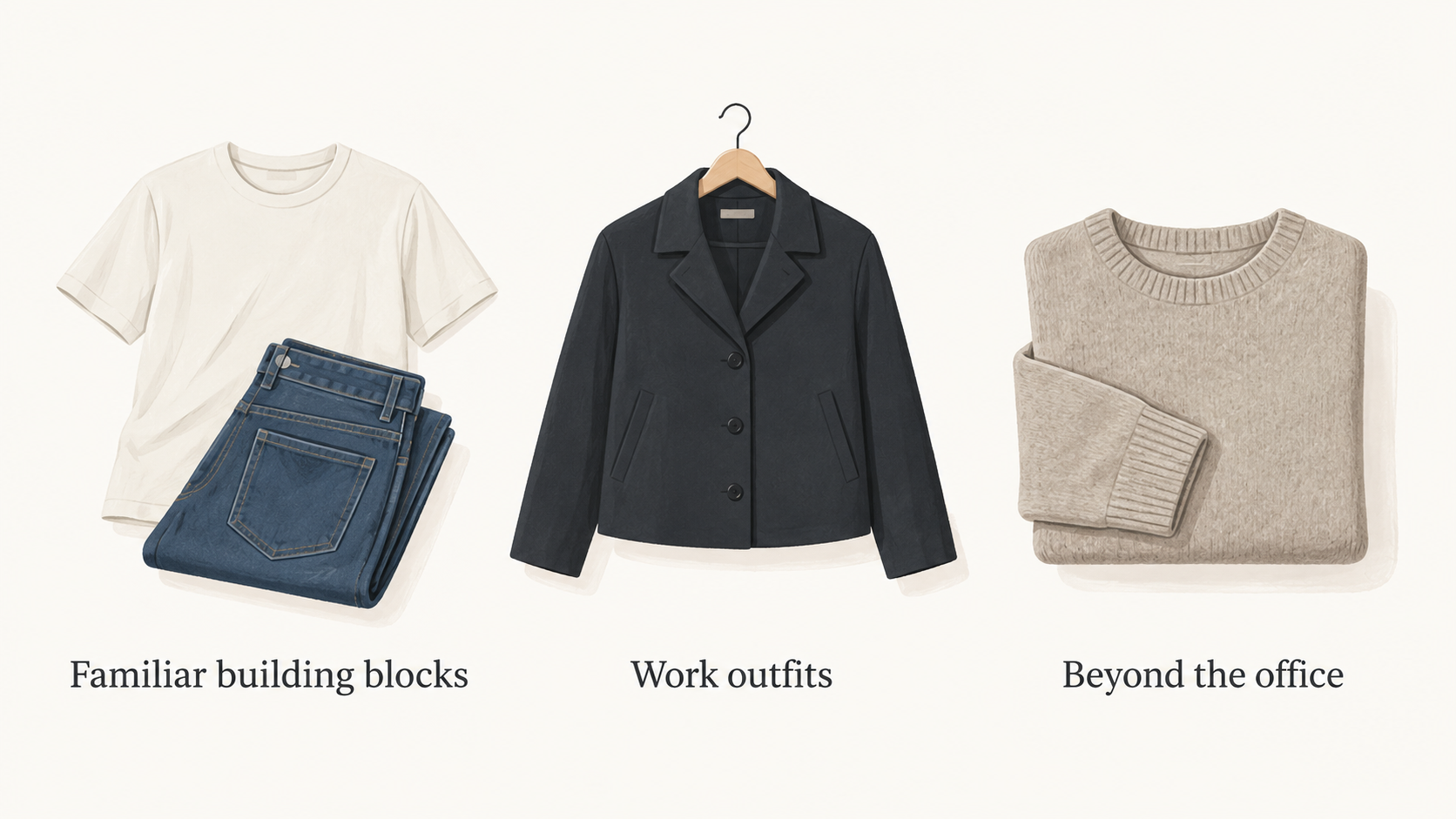
The clearest comparison is between the wardrobe roles illustrated by the sources. UNIQLO’s editorial selection spans familiar building blocks, including a crew-neck T-shirt, straight and curved-leg jeans, knitwear and short jackets. The COS excerpt concentrates on the author’s goal of making work outfits feel fresh and useful beyond the office. The two articles were not designed as a head-to-head test. UNIQLO examples, COS styling context.
| Criterion | UNIQLO: supported observation | COS: supported observation | What to check yourself |
|---|---|---|---|
| Intended use | The editorial selection presents basics as wardrobe foundations. | The 2023 feature centres on office outfits with weekend usefulness. | Whether the individual piece fills a real gap. |
| T-shirts and layering | A crew-neck tee, jumpers and cardigans feature in the selection. | The supplied excerpt does not support an equivalent category comparison. | Neckline, garment length and room under your usual outer layer. |
| Denim and silhouette | The selection includes straight and baggy curved-leg jeans; the UK snapshot also describes varied denim cuts. | Comparable denim details are absent from the excerpt. | Rise, inseam and leg measurements for the exact style. |
| Office outfits | The basics selection offers pieces to consider when assembling your own outfit. | Farrell explicitly describes refreshing her working wardrobe. | Your dress code and the complete outfit’s proportions. |
| Materials evidence | The UK page names several knitwear fibres and blends. | Comparable composition details are not supplied. | The full composition of each shortlisted garment. |
| Sizing and purchase confidence | Brand-wide sizing consistency and durability are unestablished. | Brand-wide sizing consistency, durability and current availability are unestablished. | Measurements, UK price, care instructions and return terms. |
UNIQLO’s official page mentions cashmere, Merino and lambswool options in its knitwear collection. Those category descriptions do not mean every jumper uses those fibres, or establish softness, thickness or wash performance. Even the page’s specific cashmere-blend description should not be generalised across the range. See the official category descriptions.
For a useful comparison, shortlist garments intended for the same job: two everyday jumpers, for example, rather than a basic tee against a tailored jacket. Compare their documented details before drawing conclusions about value. The evidence here cannot settle equivalent-item pricing, sizing consistency or longevity.
Where Each Brand May Suit Your Wardrobe
If you want an easier outfit routine, start with the UNIQLO examples. Offor’s selection includes a jumper she says works with existing wardrobe favourites, a cardigan, layering knitwear and two jean silhouettes. These examples suggest a practical browsing exercise: choose one gap in an outfit you already wear, then look for a piece that completes it. Her enthusiasm remains an editorial opinion rather than proof of superior performance. Read Offor’s wardrobe selections.
For instance, if your usual outfit is jeans and a T-shirt, you could investigate whether a cardigan would make that combination useful in another setting. If you already have several similar knits, another jumper may add little. That is an assessment of your wardrobe, not a claim that a particular UNIQLO garment will work for everyone.
If your office clothes feel repetitive, use the COS feature as styling inspiration. Farrell describes wanting to move beyond a repeated T-shirt, trousers and blazer combination, selecting outfits she considered suitable for work and weekends. That makes the article relevant to readers with a similar styling problem. It does not guarantee that the featured pieces are available now or appropriate for every workplace. Read Farrell’s working-week account.
For a mixed week of office days and casual plans, write down the settings one purchase needs to cover. Then assess an actual item from either brand against that list. The distinction between “wardrobe foundation” and “office refresh” is a useful starting point from these sources, not an exclusive role assigned to either retailer.
Limitations and Checks Before Buying
The main limitation is purchase confidence: the sources show selected clothing and styling opinions, but do not establish consistent sizing, long-term fabric performance or care outcomes across either brand. Missing evidence should not be read as evidence of a defect.
Use this four-part checklist on each shortlisted garment:
- Compare measurements. Where available, compare garment dimensions with a similar piece you own and like wearing. Distinguish body-size charts from measurements of the finished garment. Check relevant dimensions such as chest, waist, hip, rise, inseam and length, and investigate anything the listing leaves unclear.
- Read the item’s composition. Record the actual fibre percentages rather than relying on a collection name or a broad description such as “wool blend”. UNIQLO’s supplied page lists several knitwear options, but that category information cannot establish the composition of your chosen item. See the official UNIQLO snapshot’s source.
- Check care instructions. Confirm the washing, drying and other care requirements before ordering. Decide whether you are willing to follow them. The supplied evidence contains no comparative wash results, so there is no basis for promising that either brand will be easier to maintain or last longer.
- Verify current UK purchase terms. Check the exact product, size, colour, price, delivery charge and timing. Read the applicable return window, return method, possible fees and exclusions on the retailer’s UK site before paying.
Offor’s Los Angeles perspective does not establish UK stock or prices, and Farrell’s 2023 selection cannot confirm current COS availability. Use the articles to generate ideas, then verify the actual UK listing. UNIQLO editorial context, dated COS selection.
If essential measurements or care details are unavailable, keep that uncertainty in your decision rather than filling the gap with assumptions about the brand.
Alternatives to Choosing Just One Brand
You do not need to choose a single retailer for your entire wardrobe. A more useful approach may be to divide your shopping list by the jobs your clothes need to perform: everyday layers, comfortable trousers, an office outfit or something for a specific occasion.
Start by assembling those outfits from what you already own. Note what is missing and what merely feels repetitive. Trying a different combination may reveal that you need one carefully chosen addition rather than several replacements.
If you browse both brands, assess every candidate against the same criteria. A piece should work with your intended outfits, have sufficiently clear measurements and composition, and come with care requirements and purchase terms you accept. Avoid assigning basics automatically to one brand and smarter pieces automatically to the other.
If neither retailer provides enough information or the shape you want, broaden your search using the unresolved requirement: a particular inseam, a preferred garment length or a specific care routine. This gives you a concrete way to evaluate other options without assuming another retailer is better.
Before you shop, choose one wardrobe gap and build a shortlist around it. Compare the individual garments before committing to a brand-wide preference.
Frequently Asked Questions
Does COS sizing run larger than UNIQLO sizing?
The supplied evidence cannot establish that. There are no matched garment measurements, comparable fit trials or systematic size comparisons. A description of an oversized or relaxed cut concerns that particular design; it does not establish a sizing rule for the whole brand. Check the exact product’s size information and, where possible, compare finished-garment dimensions with something you already wear comfortably.
Can the available evidence show whether COS or UNIQLO lasts longer?
No. The material contains no matched long-term wear testing or comparative laundering results. Fibre names and editorial enthusiasm cannot establish which garment will retain its shape or appearance longer. Read composition and care information for each item, but leave the durability comparison unresolved unless you obtain more relevant evidence.
Which brand should I consider for everyday office outfits?
COS is a reasonable starting point for inspiration because Farrell’s April 2023 feature explicitly focuses on refreshing work outfits with weekend usefulness. UNIQLO’s December 2025 basics selection offers another route if you want to assemble outfits around tees, knitwear and jeans, subject to your dress code. These are styling directions, not a finding that either brand is universally more office-appropriate. COS office styling, UNIQLO wardrobe examples.
What should UK shoppers check before buying pieces featured in overseas articles?
Locate the exact garment on the retailer’s UK site and verify its product details, measurements, composition, care instructions, available options and current price. Check delivery and returns separately. An overseas recommendation does not establish UK availability or purchasing conditions, while an older feature may describe products no longer listed. If you cannot match the item, use the photograph or description as styling inspiration rather than assuming a similar-looking replacement is equivalent.
Related reading
- UNIQLO review: strengths, limits, and alternatives
- COS review: who it suits and who should skip it
- ARKET review: practical buying assessment
- Everlane review: practical buying assessment
Editorial information: About our editorial team · Read our editorial policy · Read our affiliate disclosure.